DESIGN HISTORY
Everyday objects / An illustrated history

Five old lighters.
Five clever ideas.

A miniature chemistry cabinet. A cut-glass showpiece. A length of cord that catches a spark. These five objects make everyday design surprisingly interesting.

About 4 minutes · Antique and vintage designs

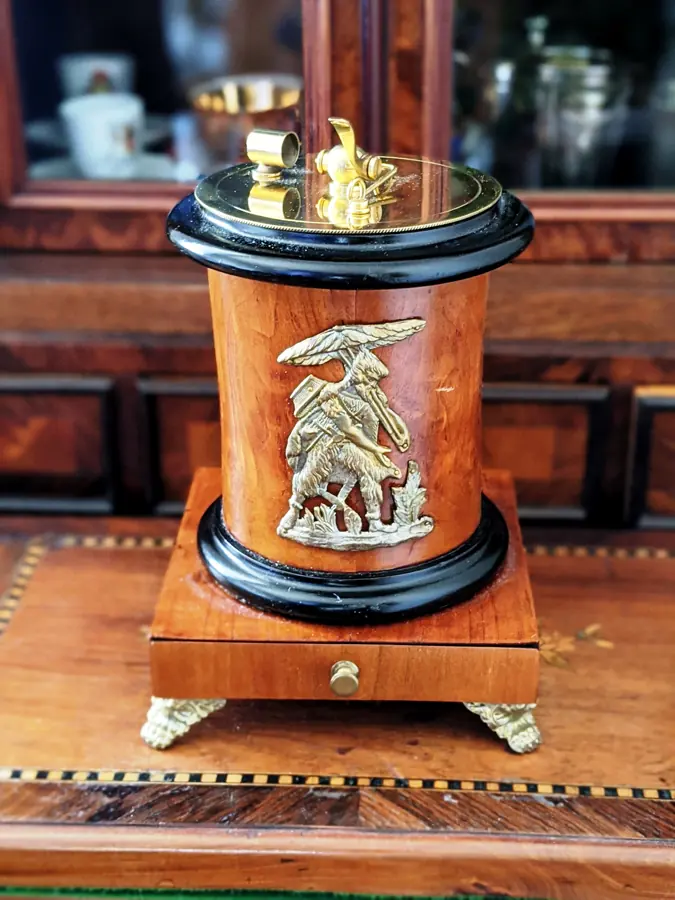
Early chemical table lighter with a wooden case and decorative brass figure
Wood-cased chemical table lighter, circa 1830. [1]
Circa 1830

The little chemistry cabinet

A small piece of furniture with a scientific secret.

The polished wooden case and brass figure make this look like something from a drawing room. Inside, however, belonged the workings of an early chemical lighter. This family of devices used hydrogen and a platinum catalyst to create a flame.

Its size is part of the story. A lighter could once be an object with its own place on the table, complete with decorative feet and a drawer. Pocket-sized convenience came in very different forms.

A detail to noticeThe exposed fittings on top. They reveal the working instrument beneath the ornament.
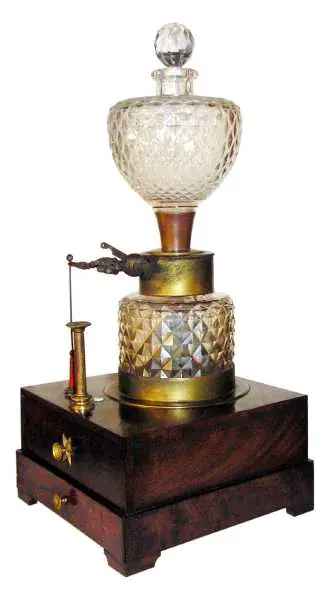
Nineteenth-century hydrogen lighter with cut-glass vessels, brass fittings and a wooden base
Hydrogen gas lighter, catalogued as 19th century. [2]
19th century

The cut-glass showpiece

Chemistry, dressed for the best room in the house.

With its faceted glass, brass fittings and dark wooden base, this example turns a practical device into a tabletop display. The archive identifies it as a nineteenth-century hydrogen gas lighter.

It belongs to the same broad chemical tradition as the first object, but makes a very different visual impression. Here, the glass takes center stage. The pleasure is in spotting how much attention went into the container around the mechanism.

A detail to noticeThe small outlet beside the glass. It is easy to miss when the glasswork steals the scene.
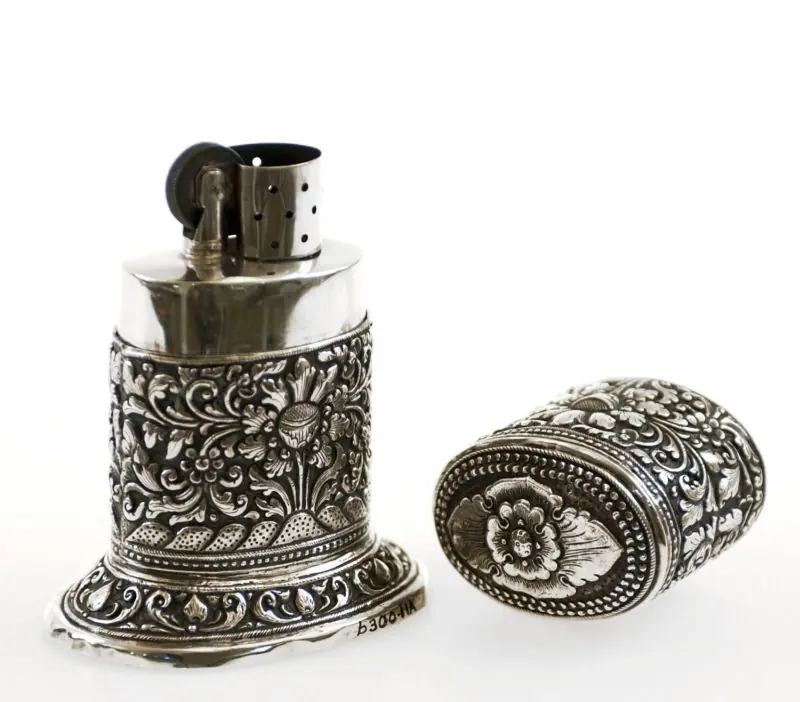
Floral silver table lighter with its matching removable lid beside it
Silver table lighter with removable lid, dated 1930–1942 in the collection record. [3]
1930–1942

The silver table ornament

Even the lid gets its own moment.

Dense floral decoration covers the body and its matching cap. Lift that cap and the practical parts appear: a spark wheel and a perforated metal surround. The collection record dates this silver example to 1930–1942.

The removable lid does more than finish the silhouette; it changes how the object is seen. Closed, it reads as a small ornamental container. Open, it reveals the compact mechanism hidden inside. One object, two very different looks.

A detail to noticeThe flower on the end of the lid, designed to be seen even when the cap is set aside.
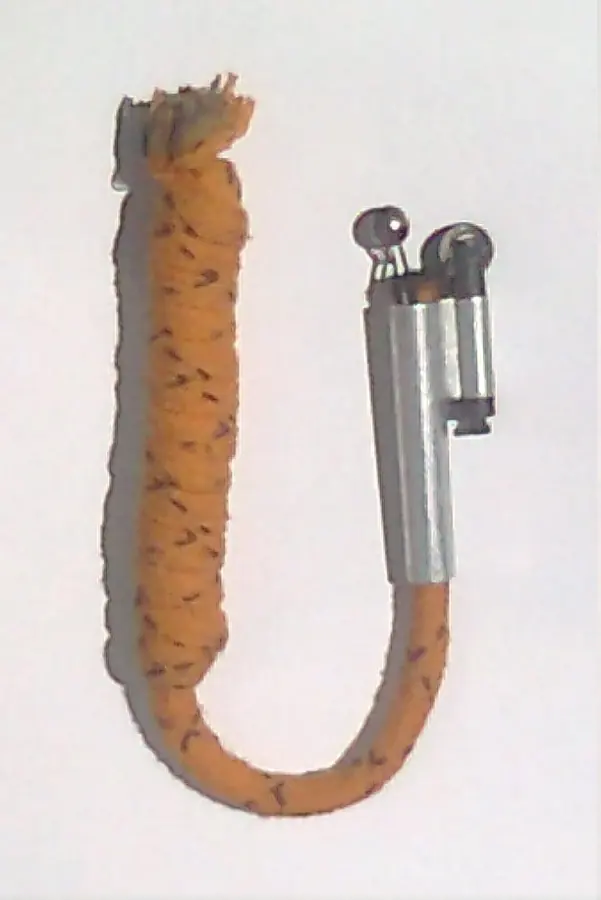
A vintage tinder lighter with a thick yellow cord and a small metal spark wheel
French tinder lighter, dated 1960 in the image record. [4]
France · 1960

The rope that catches a spark

The cord is the main event.

This type is often called a rope or tinder lighter. A spark catches in the prepared cord, creating a glowing ember rather than the familiar standing flame. The large loop makes the design look almost unfinished—until you realize that the cord is doing the important work.

The photographed example is identified as French and dated 1960. That makes it a later vintage piece in this selection, carrying on a much older idea: catch a spark in tinder and keep it glowing.

A detail to noticeHow little metal is needed beside the thick cord. Most of the object is the tinder itself.
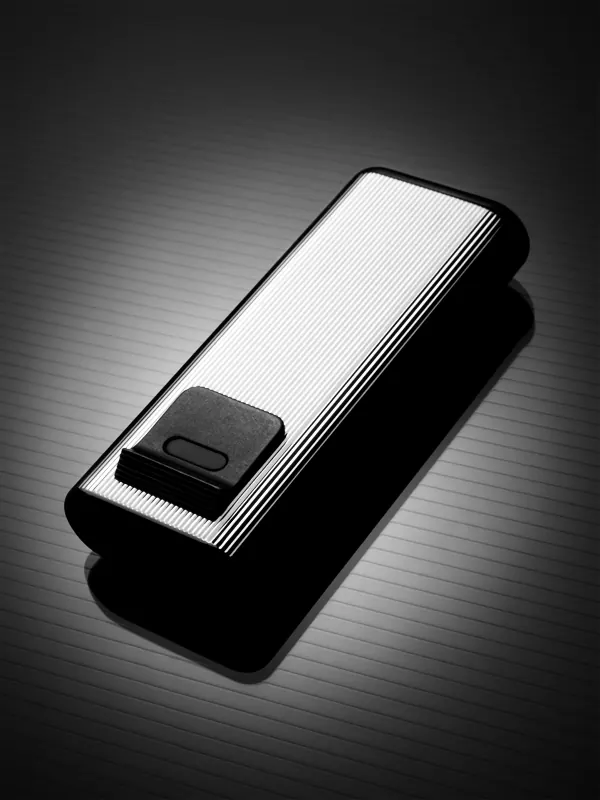
Unmarked slim black-and-silver pocket lighter with a ribbed face and dark rectangular control
Ribbed pocket lighter. The image record does not give the object's manufacture date. [5]
Pocket design · Exact date unrecorded

The quiet pocket rectangle

The decoration is the geometry itself.

Fine parallel lines, rounded corners and one dark control give this lighter its character. There is very little visual clutter. The narrow body makes the shift from tabletop display to something carried in a pocket immediately clear.

The archive does not state when this particular example was made, so it would be misleading to give it a precise year or call it a nineteenth-century antique. What the photograph does show is a thoughtful arrangement of texture, contrast and shape.

A detail to noticeThe rhythm of the fine ribs, interrupted by a single dark rectangle.

Small objects, changing priorities.

Put these designs side by side and the differences become the story. One celebrates a scientific mechanism. Another makes room for elaborate decoration. A third reduces the whole object to a cord and a few metal parts.

That is what makes old everyday objects worth a second look: a familiar job can lead to wonderfully different designs.

A note on dates and context.

This selection includes nineteenth-century antiques and later vintage designs. Dates follow the linked image or collection records; a missing manufacture date is left unassigned.

This is a design-history article, not a restoration or operating guide. Historic mechanisms are best treated as display objects unless assessed by a qualified specialist.

Sources & image credits

The photographs and object descriptions below informed this independently written overview. Images have been resized and compressed for this page; their subjects have not been retouched. Each image remains available under its credited license. Credits do not imply endorsement.

  1. Wood-cased chemical table lighter, circa 1830. Photo: Schneeo. CC BY-SA 4.0.
  2. Hydrogen gas lighter, catalogued as 19th century. Photo: Roby. CC BY-SA 3.0.
  3. Silver table lighter with removable lid, dated 1930–1942 in the collection record. Photo: Collectie Wereldmuseum (formerly Tropenmuseum), part of the National Museum of World Cultures. CC BY-SA 3.0.
  4. French tinder lighter, dated 1960 in the image record. Photo: Rolgiati. CC BY-SA 3.0.
  5. Ribbed pocket lighter Photo: Austin Calhoon. CC BY-SA 3.0.

Background reading: early chemical lighters and tinder-lighter history. Sources reviewed September 2026.

About this page: an illustrated introduction to historic object design. No products are offered for sale here.